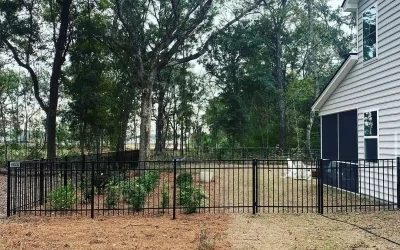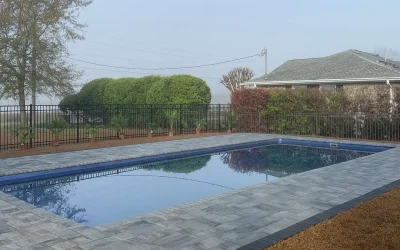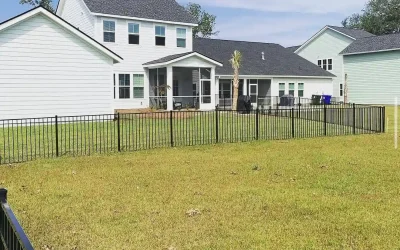

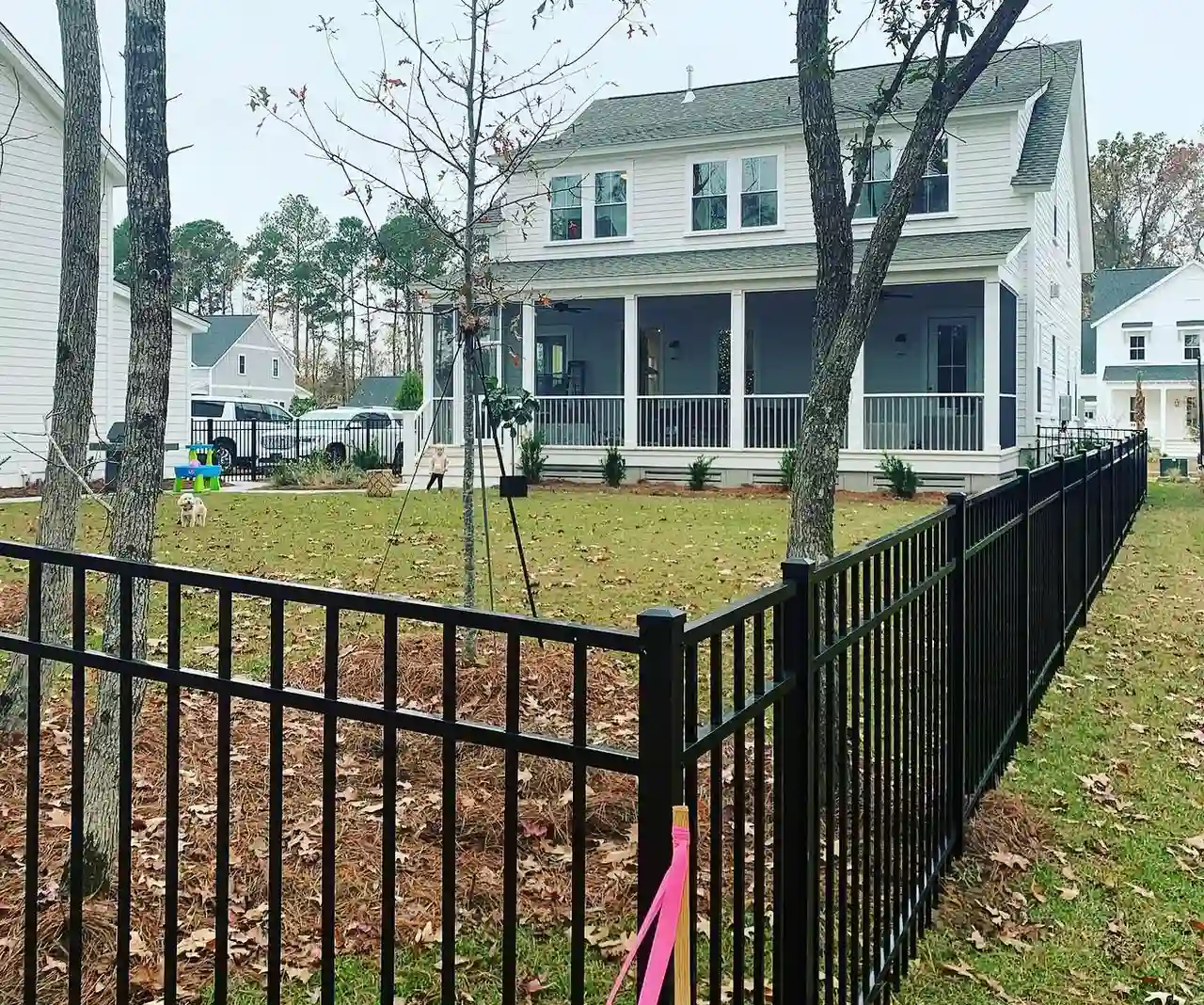
The conversation about pet fencing on Johns Island usually starts somewhere practical and arrives at aluminum pretty quickly. A homeowner with one or two dogs, a yard that needs defining, and a fence decision to make is looking for something that actually contains the dog, doesn’t look terrible, and doesn’t need constant attention over the years. Those criteria don’t require a lot of comparison shopping once aluminum fencing is on the list.
Pet fencing in aluminum on Johns Island means a secure yard with the right spacing between pickets, gates that actually latch every time, a height appropriate for the specific dogs in the household, and a black powder-coat finish that looks intentional rather than purely utilitarian. It also means no fence replacement cycle, no repainting, and no rotting sections that undermine the containment you installed the fence to provide.
Fence Pros Charleston installs aluminum pet fencing throughout Johns Island, including the more rural and larger-lot sections of the island where yard configurations vary significantly from standard suburban layouts. This guide covers how to plan an aluminum pet fence for Johns Island properties specifically.
The Pet Containment Problem on Johns Island
Johns Island properties tend to have more land than the average Charleston-area residential lot. That’s part of the appeal. Larger yards, longer fence lines, and mixed-use property configurations are common here. Dogs in these environments have more space to explore, more perimeter to test, and more opportunity to find a weakness in the containment setup.
The weaknesses that most Johns Island pet owners encounter with non-aluminum fence options fall into a few predictable categories.
Gaps That Develop Over Time
Wood fences shift and settle as posts move in the soil and boards warp. Sections that were tight when installed develop gaps at ground level or between boards over time. Dogs find these gaps reliably. A gap that a dog can push through, dig under, or widen with effort becomes an escape route. Aluminum fencing doesn’t develop gaps through material movement. The panels are rigid, the posts are set in concrete, and the spacing is consistent from installation day through year twenty.
Gates That Don’t Hold
A gate that swings open when a dog leans against it, or that relies on a simple friction latch, fails as pet containment within a few uses. Johns Island pet owners who’ve dealt with this know the specific frustration of a dog that figures out the gate mechanism. Proper gate hardware, including self-latching systems that require deliberate human operation to open, is part of every aluminum pet fence installation from Fence Pros Charleston.
Height That Doesn’t Account for the Dog
A 4-foot fence is adequate for most dogs. It’s inadequate for an athletic breed with a running start, or for a dog that has learned to climb fence sections. Height selection for a pet fence on Johns Island should account for the specific dogs in the yard: their size, their athletic capability, and their motivation level. A dog that really wants out is a different engineering challenge than a dog content to sniff along the fence line.
Aluminum Fence Configuration for Pet Containment
Picket Spacing: Standard vs. Puppy Picket
Standard aluminum fence picket spacing is designed for adult dogs of average to large size. A medium or large dog that isn’t trying to squeeze through gaps isn’t going to fit between standard pickets. For smaller breeds, though, standard spacing can be an issue. A small dog that fits through the opening can’t be contained by a fence that was spec’d for larger animals.
Puppy picket configuration adds a second set of narrower horizontal rails and smaller vertical pickets in the lower section of each fence panel, typically from ground level to about 12 to 15 inches up. This configuration closes the gap that small breeds can navigate. If the household includes small dogs or if puppies are a possibility, puppy picket should be specified during the estimate.
Fence Pros Charleston discusses picket spacing during the estimate based on the homeowner’s description of the dogs in the yard. Getting this right during specification prevents a containment failure after installation.
Height Selection for Johns Island Pet Fencing
The height recommendation for aluminum pet fencing on Johns Island follows a simple framework:
Four-foot height is appropriate for most medium and large dogs that aren’t athletic jumpers. This is the standard recommendation for a standard backyard enclosure with mixed-breed or typically sized dogs.
Five-foot height is the recommendation for athletic breeds, dogs that have shown jumping behavior, and larger dogs that are close to clearing 4 feet with any effort. The extra foot makes a meaningful difference.
Six-foot aluminum fencing is available for situations requiring it, though this height is more common in security and commercial applications than in standard residential pet fencing.
The honest answer is that there is no single right height for every Johns Island pet fence. The right answer depends on the dogs. Discussing the specific breeds and any known jumping behavior during the estimate produces the right height recommendation for the specific project.
Gate Hardware for Pet Yards
Fence gates on a pet containment fence require hardware that the dog cannot operate and that humans will actually use correctly even when their hands are full.
Self-latching hardware automatically engages the latch when the gate swings closed. This is the baseline requirement for any gate in a pet fence perimeter. A gate that needs to be actively latched after every use is a gate that gets left unlatched regularly.
Self-closing hinges are an upgrade worth considering for households where the gate gets frequent use and where inconsistent gate-closing is a realistic risk. The spring-tension closing mechanism ensures the gate returns to the closed position even if the person passing through doesn’t actively close it.
For pool applications where a gate is also part of the pool barrier, self-closing and self-latching hardware is typically specified together. For pet-only applications on Johns Island, self-latching alone often addresses the containment needs.
Planning a Pet Fence Layout for Johns Island Yards
Johns Island’s larger-lot properties often require more thought about fence layout than a standard suburban backyard. The relationship between the house, the outdoor living area, the yard’s natural features, and the property’s driveway and side yard access points creates a planning challenge that benefits from an on-site discussion.
Multi-Zone Fencing
Some Johns Island pet fence projects divide the yard into zones. A primary pet containment zone around the main outdoor living area and backyard, a secondary zone around a garden or landscape area that needs protection from the dogs, and an access gate at the driveway that handles vehicle movement separately from the pet zone. These multi-zone layouts are common on larger properties and are addressed as a complete system during the estimate rather than as separate projects.
Accounting for Property Features
Existing trees along a proposed fence line, changes in grade across the yard, outbuildings that the fence needs to work around, and natural features that affect the fence route are all Johns Island-specific considerations that an on-site estimate handles efficiently. Fence Pros Charleston’s installation team has experience with the range of site conditions common on the island and incorporates them into the layout recommendation during the visit.
Front Yard and Mixed Access
Properties where dogs also need access to the front yard require a more complete perimeter fence plan that includes side yard sections and front yard gates that coordinate with the main backyard enclosure. The estimate visit maps the full perimeter the homeowner wants fenced and designs a gate plan that handles all of the access points the property needs.
Why Aluminum Is the Right Material for Pet Fencing on Johns Island
The practical case for aluminum over wood for pet fencing on Johns Island comes down to three things: containment reliability, appearance, and total cost of ownership.
Containment reliability comes from the absence of material-driven failures. Wood shifts, develops gaps, and presents structural weaknesses that motivated dogs exploit over time. Aluminum doesn’t develop these weaknesses. The spacing is consistent and the structure remains sound.
Appearance matters for Johns Island homeowners who want a fence that looks as good as the rest of the property. A black aluminum fence with properly hung gates looks clean and intentional. A weathered wood fence looks like maintenance has been deferred. For properties where the outdoor space is part of the home’s overall presentation, the material choice reflects on the whole property.
Total cost of ownership favors aluminum significantly over a multi-decade ownership period. Wood fencing costs less initially but requires ongoing maintenance and eventual replacement. Aluminum costs more upfront but requires nothing beyond occasional cleaning for thirty or more years. The value calculation on a Johns Island property that the homeowner intends to keep for a long time consistently comes out in aluminum’s favor.
Getting a Johns Island Pet Fence Estimate
Requesting a Johns Island aluminum pet fence estimate from Fence Pros Charleston starts with a contact through the website or by phone. The team schedules an on-site visit that covers measurement, layout planning, breed-specific configuration discussion, and complete project pricing.
There’s no obligation with the estimate request, and the estimate accounts for the specific conditions of your Johns Island yard rather than a standard suburban template. Request your estimate here.
Multi-Dog Households and Pet Fence Complexity on Johns Island
Households with more than one dog add a layer of complexity to the pet fence planning conversation. Different dogs have different sizes, different energy levels, different jumping behavior, and different relationships with the fence perimeter. A fence that contains one dog reliably may not contain another.
For Johns Island households with multiple dogs, the fence specification should account for the most demanding animal in the group. If one dog is a small breed and another is a 70-pound labrador that can clear 4 feet with a running start, the fence specification needs to address both: puppy pickets for the small breed and 5-foot height for the athletic one. The fence is only as secure as its weakest configuration point.
Fence Pros Charleston discusses multi-dog household configurations during the estimate. The conversation covers each dog’s size, breed, and any known behaviors, and produces a specification that addresses the full range of containment requirements in the household.
Fencing Around Outdoor Structures on Johns Island Properties
Johns Island’s larger properties often have outdoor structures that the fence perimeter needs to work around: detached garages, outbuildings, pool houses, chicken coops, raised garden beds, and livestock structures. The fence layout needs to accommodate these structures without creating gaps in the containment system or awkward perimeter geometry.
Common approaches on Johns Island include:
Building the fence perimeter around the structure, treating it as an interior element of the fenced yard. This works when the structure is in the interior of the yard and doesn’t create awkward fence geometry on the property line.
Running the fence to the exterior wall of the structure and resuming from the opposite wall, effectively treating the structure as part of the fence line. This approach works when the structure is on or near the property line and when the structure itself provides an effective barrier for the section it replaces.
Creating a fence attachment point on the structure’s wall to connect the fence panels cleanly. This is a common approach for attaching fence sections to outbuildings and detached structures when the fence line passes through the structure’s footprint.
These decisions are made on-site during the estimate visit based on the specific property layout and the homeowner’s goals for the fenced area.
Johns Island Soil and Installation Considerations
Johns Island’s soil conditions vary across the island, from sandy coastal soil near the water to heavier clay and compacted fill in newer residential developments inland. Post setting depth and concrete requirements depend on the soil type and the post height.
For standard residential aluminum fence installations, Fence Pros Charleston’s installation team assesses the soil conditions during the estimate and installation. Posts are set at the appropriate depth and concrete specification for the conditions encountered. Where rock or unusually hard soil is encountered, the installation approach is adjusted accordingly.
In areas with high water tables or saturated soils, post footing depth and drainage considerations affect the installation specification. These conditions are less common in the residential sections of Johns Island where most pet fence projects occur, but they’re part of the assessment process for larger or more complex projects.
What to Do Before the Estimate Visit for a Johns Island Pet Fence
Homeowners who do a few things before the Fence Pros Charleston estimate visit get more out of the on-site conversation and produce a more accurate estimate.
Walk the proposed fence perimeter and note any obstacles, features, or questions along the fence line. Trees that the fence needs to work around, areas where the grade changes significantly, structures that the fence needs to connect to, and any existing fence sections that need to be removed are all things the estimator will assess, but having the homeowner’s awareness of these features ready makes the conversation more productive.
Know the dogs. Have the breeds, sizes, and any relevant behavioral notes ready to discuss. Jumping history, digging tendencies, and gate-testing behavior all affect the specification.
Know the gate locations you want. Think through daily use: where does the lawn equipment enter, where do people enter from the front, where is the garage or driveway access that needs to connect to the fenced yard? Every access point you identify during the estimate becomes a properly specified gate rather than a gap.
Check the property survey or ask about property lines. The fence installs at the agreed fence line, not a surveyed line. Knowing where the property line is before the estimate prevents the common misunderstanding about how close to the line the fence will be installed.
Conclusion
Aluminum pet fencing on Johns Island provides the combination of secure containment, clean appearance, and long-term durability that the island’s larger-yard properties and dog-owning homeowners need. The configuration decisions, including picket spacing, height, and gate hardware, are specific enough that a professional on-site estimate is the right starting point.
Fence Pros Charleston installs aluminum fencing throughout Johns Island with a process that starts with the right questions and finishes with a fence layout that works for the specific household and yard. Protect your pets with a cleaner-looking aluminum fence. Request a Johns Island estimate today.
Frequently Asked Questions about Aluminum Pet Fencing in Johns Island, SC
Is aluminum fencing safe for dogs in Johns Island yards?
Yes, for virtually all dog sizes and temperaments with proper configuration. The key variables are picket spacing (puppy pickets for small breeds), fence height (5-foot for athletic breeds or confirmed jumpers), and gate hardware (self-latching for reliable containment). Fence Pros Charleston discusses each of these factors during the estimate and specifies the configuration appropriate for the specific dogs in the household.
What is puppy picket aluminum fencing?
Puppy picket fencing adds a second, tighter picket configuration to the lower section of each fence panel, typically from the ground to about 12 to 15 inches high. The reduced spacing prevents small dogs and puppies from squeezing between standard pickets that were designed for medium and large breeds. If the household includes small dogs or dogs expected to grow into larger versions of small breeds, puppy picket should be specified from the start of the project.
How tall should an aluminum pet fence be on Johns Island?
Four feet for most dogs; 5 feet for athletic breeds, large dogs, or any dog that has shown jumping behavior. The height selection should be based on the specific dogs in the yard rather than a general recommendation. A 4-foot fence that a particular dog can clear is not effective containment, regardless of how it’s specified. Discussing the specific breeds and any known behaviors during the estimate produces the right recommendation.
Can aluminum pet fencing include self-closing or lockable gates?
Yes. Self-latching gate hardware is standard for pet fence applications and automatically engages the latch when the gate swings closed. Self-closing hinges are available for gates that need to return to the closed position without manual effort. Lockable hardware is available for additional security. Gate hardware is selected based on the application during the estimate process.
How does Fence Pros Charleston quote a pet fencing project on Johns Island?
Contact Fence Pros Charleston through the website or by phone to request an on-site estimate. The team measures the property, discusses the specific dogs in the household and any relevant behaviors, plans the fence layout including gate locations, and presents a complete project estimate for the specific configuration. Estimates are free and account for Johns Island’s larger-lot and varied site conditions.
Can aluminum pet fencing work on a sloped yard on Johns Island?
Yes. Aluminum fence panels can be installed in stepped or racked configurations to follow grade changes along the fence line. Johns Island’s larger properties often have some grade variation, and the installation approach accounts for this during the estimate. Racked panels follow the slope smoothly; stepped configurations use level panels at incremental height changes. The appropriate approach depends on the degree of slope at each section of the fence line.
What makes aluminum pet fencing better than wood for a Johns Island yard?
Aluminum eliminates the material-failure modes that wood develops over time: warping, rotting, post movement, gap development, and board replacement cycles. For a Johns Island property where the goal is long-term containment reliability without ongoing maintenance, aluminum provides a more dependable solution. The black powder-coat finish also produces a cleaner appearance than wood at any stage of its service life, which matters for homeowners who care about how the yard looks as much as what it contains.