
A pool fence is defined as a physical safety barrier required by law in most U.S. jurisdictions to prevent unauthorized access to residential swimming pools. The role of fence in new pool installation goes far beyond aesthetics. It is your primary defense against accidental drowning, your legal requirement for a certificate of occupancy, and your first design decision that shapes the entire backyard experience. Proper isolation fencing could prevent an estimated 348 drowning deaths annually in the U.S. and avoid approximately $4.5 billion in associated costs. That single statistic reframes every conversation about whether fencing is optional. It is not.
What safety and compliance roles does a fence serve in new pool installation?
Pool fencing is the most effective drowning prevention method available for young children and pets, according to HealthyChildren.org. Four-sided isolation fencing, which completely encloses the pool on all sides, reduces accidental child drowning incidents by approximately 83%. That number alone should drive every material and design decision you make.
The International Residential Code 2024 (IRC 2024) sets the federal baseline for pool barrier requirements. Under these standards, residential pool barriers must meet the following minimum specifications:
-
Height: At least 48 inches tall on the exterior side, measured from the highest grade point
-
Openings: No gap large enough to allow passage of a 4-inch diameter sphere
-
Gates: Self-closing and self-latching, opening outward away from the pool
-
Latch height: At least 54 inches above ground if the latch is accessible from the pool side
-
Design: No footholds or horizontal rails that a child could use to climb
In North and South Carolina specifically, pool fencing is required as a condition for permitting and the certificate of occupancy for any new pool construction. The fence inspection is scheduled separately from the pool rough-in inspection, which means delays in fencing can hold up your entire project completion.
Pro Tip: Never prop open a pool gate or disable the self-latching mechanism, even temporarily. A gate left open for 60 seconds is all the time an unsupervised toddler needs to reach the water.
The gate hardware requirements deserve special attention. Latches must be placed out of a child’s reach, with a minimum height of 54 inches above ground. Gates must swing outward so that a child pushing against the gate from inside the pool area cannot accidentally open it. These are not suggestions. They are code-mandated specifications that inspectors check during final certification.
How does fencing contribute to privacy and aesthetic value?
A pool fence is not just a safety device. It is a design element that defines the character of your entire backyard. The material and style you choose directly affect how much privacy you get, how your yard looks from the street, and how the space feels when you are actually using the pool.
Here is how the most common materials break down by privacy and aesthetic impact:
-
Wood: Delivers maximum privacy with a natural, warm look. Cedar and pressure-treated pine are popular in Charleston-area yards. Requires regular sealing and staining to resist moisture and humidity.
-
Vinyl (PVC): Offers solid privacy panels with minimal maintenance. Resists rot, insects, and fading. Available in white, tan, and gray tones that complement most home exteriors.
-
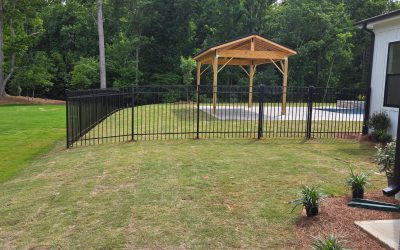
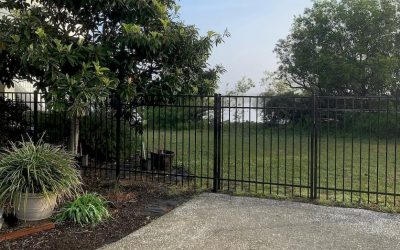
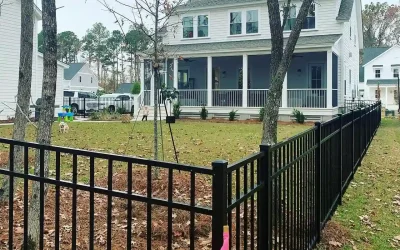
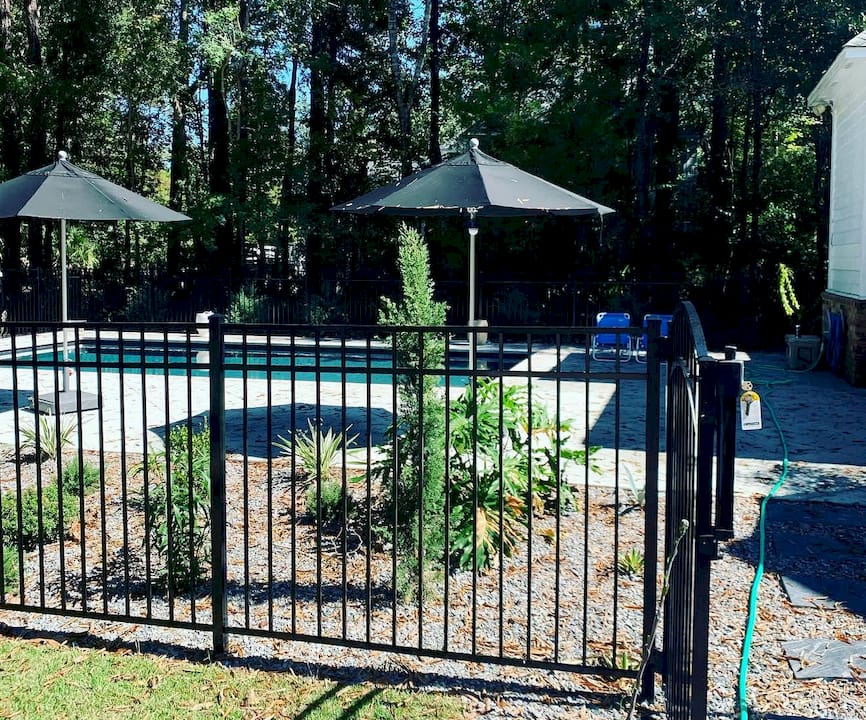
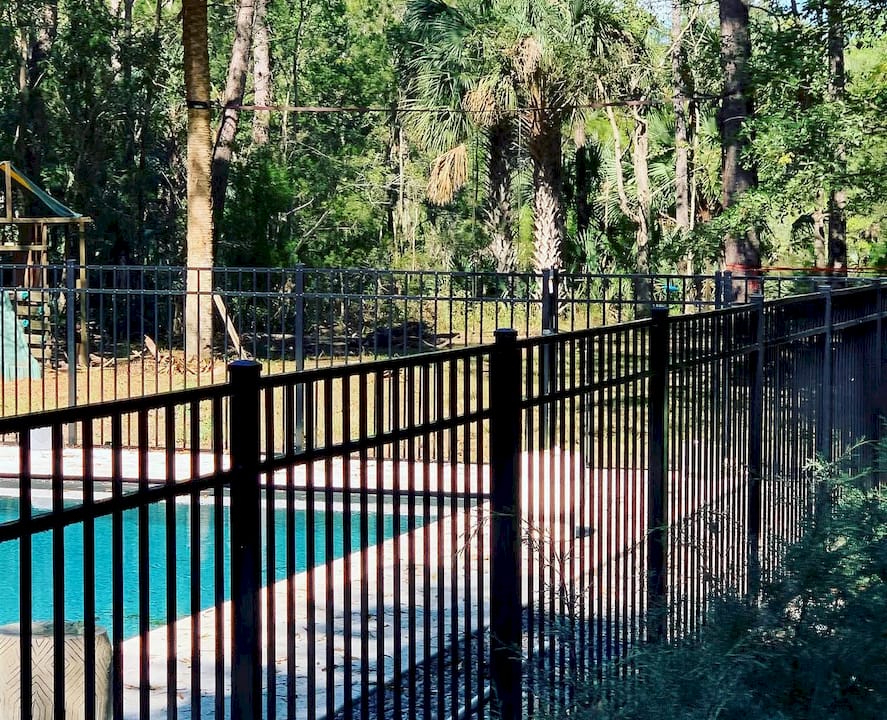
Aluminum: Provides an open, elegant look with vertical pickets. Minimal privacy but excellent visibility for supervising children in the pool. Powder-coated finishes resist rust in coastal environments.
-
Glass panels: Creates a modern, resort-style aesthetic with full visibility. Frameless glass is the top choice for homeowners who want an unobstructed view of the pool and surrounding landscape.
The balance between visibility and enclosure matters more than most homeowners realize. A solid wood or vinyl fence gives you privacy from neighbors but reduces your sightlines to the pool, which can actually work against supervision. Glass and aluminum keep the pool visible from the house, which many safety experts prefer. You can review aluminum, vinyl, and wood options in detail to match your specific yard layout and home style.
What are the best fence types for new pool installation?
Choosing the right material is where most homeowners get stuck. The best pool fence types for safety combine climb-proof design, compliant gap spacing, and durable materials that hold up in your local climate. Here is a direct comparison of the most common options:
| Material | Safety Rating | Maintenance | Privacy | Best For |
|---|---|---|---|---|
| Aluminum | High | Low | Low | Visibility, coastal climates |
| Vinyl/PVC | High | Very Low | High | Privacy, low upkeep |
| Mesh (removable) | High | Low | None | Temporary use, rentals |
| Glass panels | High | Medium | None | Modern aesthetics |
| Wood | Medium | High | High | Traditional look |
| Chain-link | Low (unmodified) | Low | None | Not recommended |
Chain-link fences are easy to climb and are not recommended as pool barriers unless openings are restricted to 1¾ inches or less. That modification is expensive and rarely done correctly, making chain-link a poor default choice for pool enclosures.
Material selection directly impacts compliance risk because differences in climbability and opening sizes determine whether a fence passes inspection. Aluminum fencing with vertical pickets spaced less than 4 inches apart is one of the most reliably compliant options. Mesh removable fences, popular with families who want to take the fence down for adult gatherings, are code-compliant when properly installed and stored correctly when removed. For coastal properties like those on Kiawah Island, aluminum pool fencing is particularly well-suited because it resists salt air corrosion without requiring painting or sealing.
Pro Tip: Avoid any fence design with horizontal rails on the exterior side. Children use them as ladder rungs. Vertical pickets only, with no decorative cross-bracing below 45 inches, is the safest configuration.
When and how should the pool fence be installed during construction?
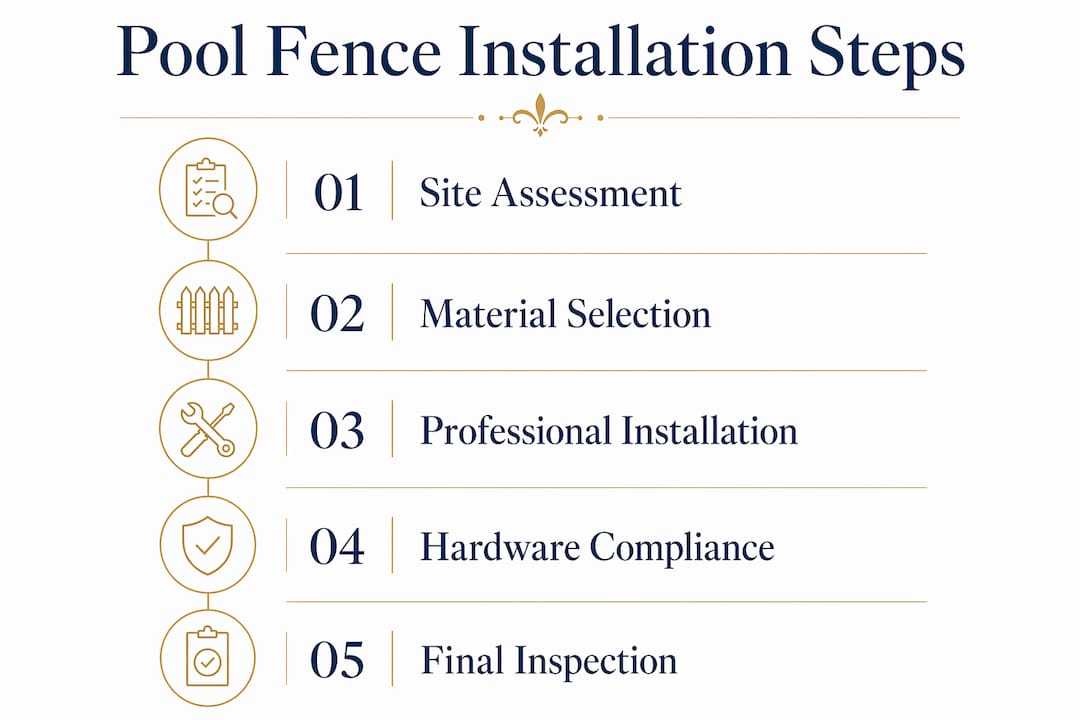
Timing your fence installation correctly prevents costly rework and keeps your project on schedule. Here is the sequence that professional installers follow for new pool construction:
-
Wait for pool structural completion. Install the fence after the pool shell is finished and backfilled. Installing earlier risks damage to fence posts from heavy equipment moving around the site.
-
Complete a site assessment. A professional installer walks the perimeter to identify slopes, steps, utility lines, and obstacles that affect fence layout and post placement. Fence layout must account for topography to maintain consistent height and gap spacing across uneven ground.
-
Locate underground utilities. Call 811 before any digging. Post holes for pool fences are typically 18 to 24 inches deep, well within the range of buried electrical, gas, and irrigation lines.
-
Install posts, panels, and gates. Posts are set in concrete footings. Panels are attached and leveled. Gates are hung and adjusted for proper swing direction and self-closing tension.
-
Schedule the fence inspection. In South Carolina, this inspection is separate from the pool inspection. The inspector checks height, gap spacing, gate operation, latch height, and overall climb resistance before issuing approval.
-
Perform post-installation maintenance checks. Test gate latches monthly. Check for loose posts after heavy rain. Inspect for any gaps that may have opened due to ground settling.
Pool fencing is treated as a life-safety system requiring professional installation to meet precise structural and hardware specifications. DIY installation frequently fails inspection on gate alignment, post depth, or height measurement on sloped lots.
What common mistakes should homeowners avoid with pool fencing?
Most compliance failures come from the same handful of errors. Knowing them in advance saves you from failed inspections, fines, and genuine safety gaps.
-
Using the yard perimeter fence as the pool barrier. Most property fences do not meet pool barrier requirements for height, gate hardware, or opening size. A dedicated pool fence is almost always required.
-
Measuring fence height incorrectly on sloped lots. Height must be measured from the highest exterior grade point. Measuring from the low side creates a fence that appears compliant but fails inspection.
-
Disabling or propping open self-closing gates. This is the single most common behavioral failure. Gates must function as designed at all times.
-
Choosing fences with horizontal rails or wide openings. These create climbing footholds and squeeze-through gaps that defeat the entire purpose of the barrier.
-
Skipping the permit and inspection process. Unpermitted pool fences create liability issues when selling the home and may require complete removal and reinstallation.
-
Neglecting maintenance after installation. Hinges loosen, latches wear, and posts shift. A fence that passed inspection two years ago may have gaps or gate failures today.
Key takeaways
A properly installed, four-sided pool fence is the single most effective measure for preventing child drowning and achieving code compliance in new pool construction.
| Point | Details |
|---|---|
| Safety is the primary function | Four-sided isolation fencing reduces child drowning incidents by approximately 83%. |
| IRC 2024 sets the baseline | Barriers must be 48 inches tall, with self-closing gates and latches at 54 inches minimum. |
| Material choice affects compliance | Aluminum and mesh are the most reliably compliant options; chain-link is not recommended. |
| Timing matters during construction | Install after pool structural completion to avoid equipment damage and failed inspections. |
| Yard fences rarely qualify | A dedicated pool barrier is almost always required regardless of existing perimeter fencing. |
Why I think most homeowners underestimate what a pool fence actually does
After working with hundreds of homeowners on pool fence projects across the Charleston area, the pattern I see most often is this: people treat the fence as the last item on the pool installation checklist rather than the first design decision. They spend months choosing tile, coping, and lighting, then rush the fence selection in the final week before inspection.
That order of priorities is backwards. The fence determines sightlines, defines the backyard layout, and sets the legal foundation for the entire project. Get it wrong and you are looking at a failed inspection, a delayed certificate of occupancy, and a pool you cannot legally use.
The other thing I have noticed is that homeowners consistently overweight aesthetics and underweight gate hardware. A beautiful glass fence with a poorly adjusted self-closing gate is more dangerous than a plain aluminum fence with a perfectly functioning latch. The gate is where most real-world failures happen, not the fence panels themselves.
My honest recommendation: treat the fence as a life-safety system first, a design element second. Choose a material that passes inspection reliably in your specific yard conditions, then customize the finish, color, and style within those constraints. That sequence produces both a compliant fence and a great-looking backyard. Reversing it produces neither.
— SEO
Get a code-compliant pool fence installed by Fenceproscharleston

Fenceproscharleston handles pool fence installation in Charleston from site assessment through final inspection, with no subcontractors involved. Every installer is trained and background-checked, which is why the company has earned over 300 five-star reviews from local homeowners. The team manages permit coordination, utility location, panel and gate installation, and inspection scheduling so you do not have to track those details yourself. Material options include aluminum, vinyl, mesh, and glass, with gate hardware that meets IRC 2024 specifications out of the box. If you need compliant pool gate hardware or a full enclosure built to pass inspection the first time, contact Fenceproscharleston for a transparent, no-hidden-fee quote.
FAQ
What is the minimum height for a pool fence?
Per IRC 2024, residential pool barriers must be at least 48 inches tall, measured from the highest exterior grade point. In North and South Carolina, this is a mandatory requirement for pool permitting and certificate of occupancy.
Can I use my existing yard fence as a pool barrier?
Most property perimeter fences do not meet pool barrier code requirements for height, gate hardware, or opening size. A dedicated pool fence is almost always required unless your existing fence satisfies every IRC 2024 specification.
What is the best fence type for pool safety?
Aluminum and mesh removable fences are the most reliably compliant options for new pool installations. Both offer climb-resistant vertical designs, compliant gap spacing, and durable performance in coastal climates like Charleston.
Do pool fence gates need special hardware?
Yes. Gates must be self-closing, self-latching, and open outward away from the pool. The latch must be positioned at least 54 inches above ground if it is accessible from the pool side, keeping it out of a child’s reach.
When should the pool fence be installed during construction?
Install the fence after the pool shell is structurally complete and backfilled. Installing earlier risks post damage from heavy construction equipment, and the fence inspection in South Carolina must be scheduled separately from the pool rough-in inspection.