
Backyard security fencing is defined as any perimeter barrier designed to contain children and pets, deter intruders, and provide privacy through a combination of material strength, height, spacing, and gate hardware. The right backyard security fence options do all three jobs at once without forcing you to choose between safety and curb appeal. Vinyl, wood, ornamental aluminum, and chain link materials each meet different needs depending on your yard size, pet type, and privacy goals. This guide covers what actually separates a secure fence from a decorative one, so you can make a confident, informed choice.
1. What are the safest fence materials for kids and pets?
Vinyl is the safest fence material for families. It is up to five times stronger than wood in impact resistance and delivers a smooth, splinter-free surface with no protruding hardware. Kids can run into it, and pets can press against it, without the injury risks that wood and metal create.
Wood fences are popular for their natural look and customizability, but they carry real safety trade-offs. Wood requires regular sealing, sanding, and staining to prevent splinters, rot, and loose boards. Skip one season of maintenance and you have a hazard, not a barrier.
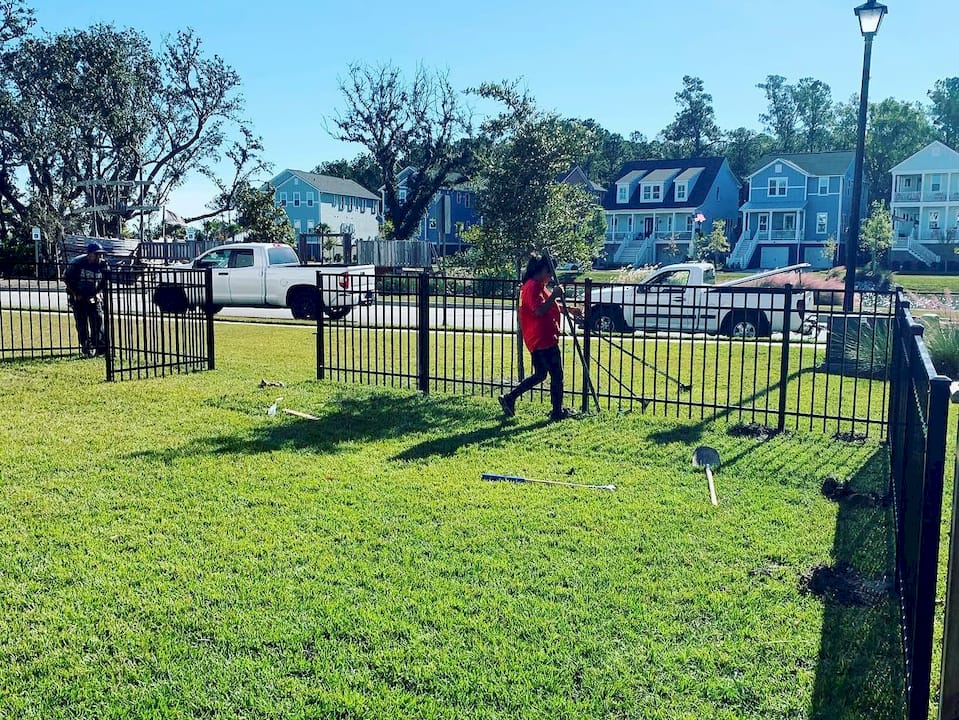
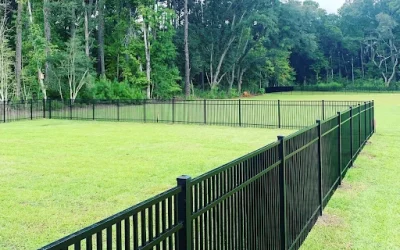
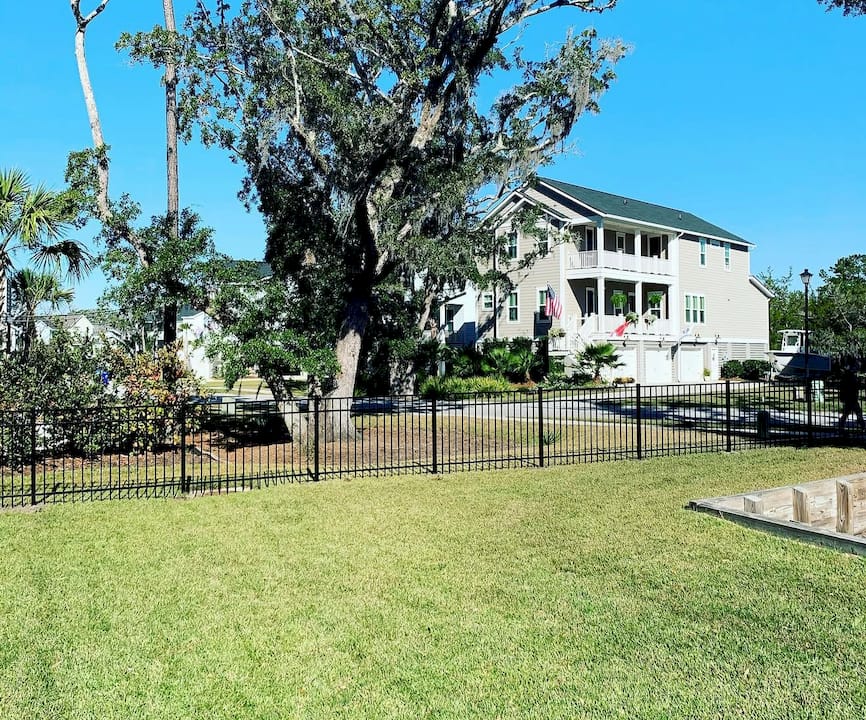
Ornamental aluminum sits in a strong middle position. It offers excellent durability, resists rust, and keeps sightlines open for supervising kids and pets. You can explore aluminum fencing for pets to see how spacing and height options work for different breeds and yard sizes. The trade-off is that open designs provide less privacy than solid panels.
Chain link is the most affordable option and holds up well over time. The climbability problem is real, though. Without privacy slats or a coyote roller added to the top, chain link gives determined kids and agile pets an easy exit.
-
Vinyl: Safest surface, low maintenance, strong impact resistance
-
Wood: Natural look, fully customizable, but requires consistent upkeep to stay safe
-
Ornamental aluminum: Durable, rust-resistant, open design supports supervision
-
Chain link: Affordable and durable, but climbable without modifications
Pro Tip: If you have both young children and a large dog, vinyl panels with a reinforced aluminum frame give you the smooth surface safety of vinyl with the structural rigidity of metal. It is one of the best multipurpose backyard fence solutions available.
2. How fence height and spacing affect security and safety
Fence height is the single most controllable variable in backyard security. Standard privacy fences run 4–6 feet tall, with 6 feet being the most common choice for effective containment and privacy. That extra foot matters more than most homeowners expect.
Picket and slat spacing is equally critical. Spacing must stay under 4 inches to prevent a child’s head or a small pet from slipping through. That standard applies to every panel, not just the gate. One oversized gap in a single panel is enough to create a serious hazard.
Gate latch height matters as much as fence height. Latches positioned at least 54 inches from the ground are the accepted standard for childproofing. A latch a toddler can reach defeats the purpose of the entire fence.
Horizontal rails and decorative footholds built into the fence design create unintended climbing ladders. A fence with three horizontal rails evenly spaced gives a determined six-year-old a step-by-step route over the top. Vertical-only designs or rails placed on the interior side of the fence remove that risk.
Pro Tip: On sloped terrain, ground clearance gaps of even 2–3 inches can create escape points for small pets and entry points for intruders. Ask your installer about stepped panel installation or custom-cut panels that follow the grade of your yard.
3. Gate features and maintenance practices that improve security
Self-closing hinges and self-latching locks are the two gate features that prevent the most accidents. A gate that swings shut and locks automatically removes human error from the equation entirely. Without them, one distracted moment is all it takes for a child or pet to slip out.
Gate hardware fails faster than most homeowners expect. Biannual alignment and latch engagement checks are the industry standard because hardware can loosen within months of installation under regular use. A gate that latched perfectly in spring may swing freely by fall.
Reinforced gate posts are non-negotiable for security. The gate is the most-used part of any fence, and undersized or improperly set posts will shift over time. A sagging gate creates gaps at the bottom and sides that undermine the entire perimeter.
-
Check latch engagement and gate swing twice per year, in spring and fall
-
Lubricate hinges and latch mechanisms at each inspection
-
Verify post alignment has not shifted, especially after heavy rain or freeze-thaw cycles
-
Confirm latch height remains at or above 54 inches after any post settling
-
Test self-closing tension to confirm the gate does not bounce back open
Pro Tip: Add a padlock-compatible latch to your primary gate even if you do not use a padlock daily. It gives you the option to lock down the yard quickly when needed, and the hardware upgrade costs very little compared to the security it adds.
4. How yard layout and landscaping affect fence effectiveness
Fence security does not stop at the fence line. Dense vegetation planted within 18 inches of the fence provides climbing aids for intruders and accelerates wood decay by trapping moisture. A clear perimeter path is a maintenance and security requirement, not just a landscaping preference.
Play equipment placement is one of the most overlooked backyard safety hazard fence assessment failures. Play structures placed close to a fence give children a platform to climb over, regardless of how tall or strong the fence is. Keep swing sets, trampolines, and climbing structures at least 6 feet from the fence line.
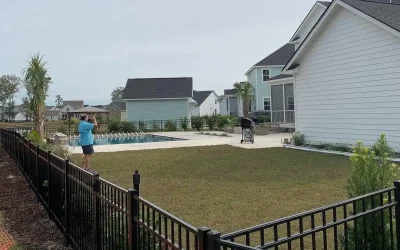
Functional backyard fence zone planning separates the yard into distinct areas: a play zone, a pet zone, and an adult or utility zone. Secondary fencing or barriers near pools, HVAC equipment, or garden beds prevent access to hazards without requiring you to fence the entire yard at maximum height.
| Landscaping factor | Security impact | Recommended action |
|---|---|---|
| Trees near fence | Climbing aid, root damage | Keep trees 6+ feet from fence line |
| Dense shrubs within 18 inches | Moisture trap, decay accelerant | Maintain clear perimeter path |
| Sloped terrain | Ground gaps for pets and intruders | Use stepped or grade-following panels |
| Play equipment near fence | Climbing platform for children | Position 6+ feet from fence line |
| Pool or hazard zones | Unsupervised access risk | Add secondary barrier or gate |
5. How to choose the best fence type for your specific situation
The right fence depends on what you are protecting against and who you are protecting. The table below compares the top options across the criteria that matter most to families.
| Fence type | Safety for kids/pets | Privacy level | Maintenance | Relative cost |
|---|---|---|---|---|
| Vinyl | Highest | High | Low | Moderate |
| Wood | Moderate | High | High | Low to moderate |
| Ornamental aluminum | High | Low | Low | Moderate to high |
| Chain link | Moderate | Low | Very low | Low |
| Composite | High | High | Low to moderate | High |
For families with young children and small pets, vinyl at 6 feet with under-4-inch spacing is the strongest choice. For homeowners who prioritize supervision visibility alongside security, ornamental aluminum fencing delivers durability and open sightlines without sacrificing structural integrity.
Budget-conscious homeowners often start with chain link and add privacy slats and a coyote roller to address the two biggest weaknesses. That combination costs less than vinyl upfront but requires more planning to execute well.
For maximum security, residential electric fences are worth considering. They can last 15+ years, use modular designs for faster installation, and trigger automated intrusion alarms through pulse detection. They are not common in residential neighborhoods, but they represent the high end of what is available when security is the top priority.
Mixed-material approaches work well on larger properties. A solid vinyl or wood privacy fence along the street-facing sides protects privacy, while ornamental aluminum on the back and side yards maintains visibility for supervising children and pets. You can review a full breakdown of residential fence materials to compare costs and performance side by side.
Pro Tip: Solid privacy fences block visual triggers that cause pets to bark or lunge at passersby. If your dog reacts to street traffic, a solid panel fence is both a safety and a quality-of-life upgrade.
Key takeaways
The most secure backyard fence combines the right material, a minimum 6-foot height, under-4-inch spacing, and self-latching gates maintained on a biannual schedule.
| Point | Details |
|---|---|
| Material safety matters most | Vinyl is the safest surface for families; aluminum follow closely behind. |
| Height and spacing are non-negotiable | Six feet tall with spacing under 4 inches stops most climbing and containment failures. |
| Gates are the weakest link | Self-closing, self-latching gates with 54-inch-high latches prevent the majority of accidents. |
| Landscaping affects security | Keep vegetation and play equipment at least 6 feet from the fence to eliminate climbing aids. |
| Match fence type to your situation | Vinyl suits young children and small pets; ornamental aluminum suits supervision-focused yards. |
What I have learned after seeing hundreds of backyard fence installs
Most homeowners focus almost entirely on the fence panels and forget that the gate is where security actually breaks down. I have seen beautifully installed 6-foot vinyl fences with a gate that swings open on its own because the self-closing spring was never adjusted after installation. The fence did its job. The gate did not.
The other mistake I see constantly is treating fence height as the only security variable. A 6-foot fence with a trampoline 3 feet away is not a 6-foot fence. It is a 3-foot fence with a launching pad. Functional backyard fence zone planning is not a luxury. It is what makes the fence actually work.
The trend I find genuinely useful is the move toward mixed-material designs. Solid vinyl or wood on the street side for privacy, ornamental aluminum on the interior sides for supervision. That combination solves two problems at once without compromising either goal. It is also more cost-effective than running premium material around the entire perimeter.
One thing most articles skip: terrain. A fence installed on flat ground by a contractor who does not account for your yard’s slope will have gaps within a year. Those gaps are not cosmetic problems. They are escape routes. Always confirm your installer addresses grade changes before the first post goes in.
Fenceproscharleston can secure your backyard the right way
If you are ready to move from research to installation, Fenceproscharleston handles every project with in-house, background-checked professionals. No subcontractors. No surprises on the final bill. The team has earned over 300 five-star reviews from Charleston-area homeowners who needed exactly what you are looking for: a fence that keeps kids and pets safe, adds privacy, and holds up long-term.
Fenceproscharleston offers residential security fencing in vinyl, wood, aluminum, and chain link, along with gate installation in Charleston built to self-close and self-latch from day one. Get a transparent quote with no hidden fees and a fast installation turnaround. Your backyard should be the safest place your family spends time.
FAQ
What is the safest fence material for children and pets?
Vinyl is the safest fence material for families because it is splinter-free, rust-resistant, and up to five times stronger than wood in impact resistance.
How tall should a backyard security fence be?
Six feet is the standard height for effective backyard security and containment. Taller 7–8 foot options are available for higher-security situations, but 6 feet meets most residential needs for children and pets.
What fence spacing prevents kids and pets from getting through?
Fence slat or picket spacing must stay under 4 inches to prevent children’s heads and small pets from slipping through. This standard applies to every panel and the gate, not just the main fence sections.
How often should I inspect my backyard fence gate?
Biannual inspections in spring and fall are the industry standard for gate hardware. Check latch engagement, hinge alignment, and self-closing tension at each inspection since hardware can loosen within months of regular use.
Can landscaping near my fence create a security risk?
Yes. Vegetation within 18 inches of the fence provides climbing aids and traps moisture that accelerates wood decay. Keep a clear perimeter path and position play equipment at least 6 feet from the fence line to eliminate unintended climbing routes.